Heathcliff
Heathcliff is the central figure of Emily Brontë's Wuthering Heights, a character of such elemental force that he reshapes the lives of everyone around him. Introduced as a dark-skinned, orphaned child from the Liverpool streets, he is taken in by Mr. Earnshaw and grows into a figure of profound love and implacable hatred. His existence is a vortex of passion, degradation, and calculated revenge, driving the novel's plot across two generations and leaving a legacy of ruin that only dissolves in the quiet union of the surviving heirs.
Identity and Origins
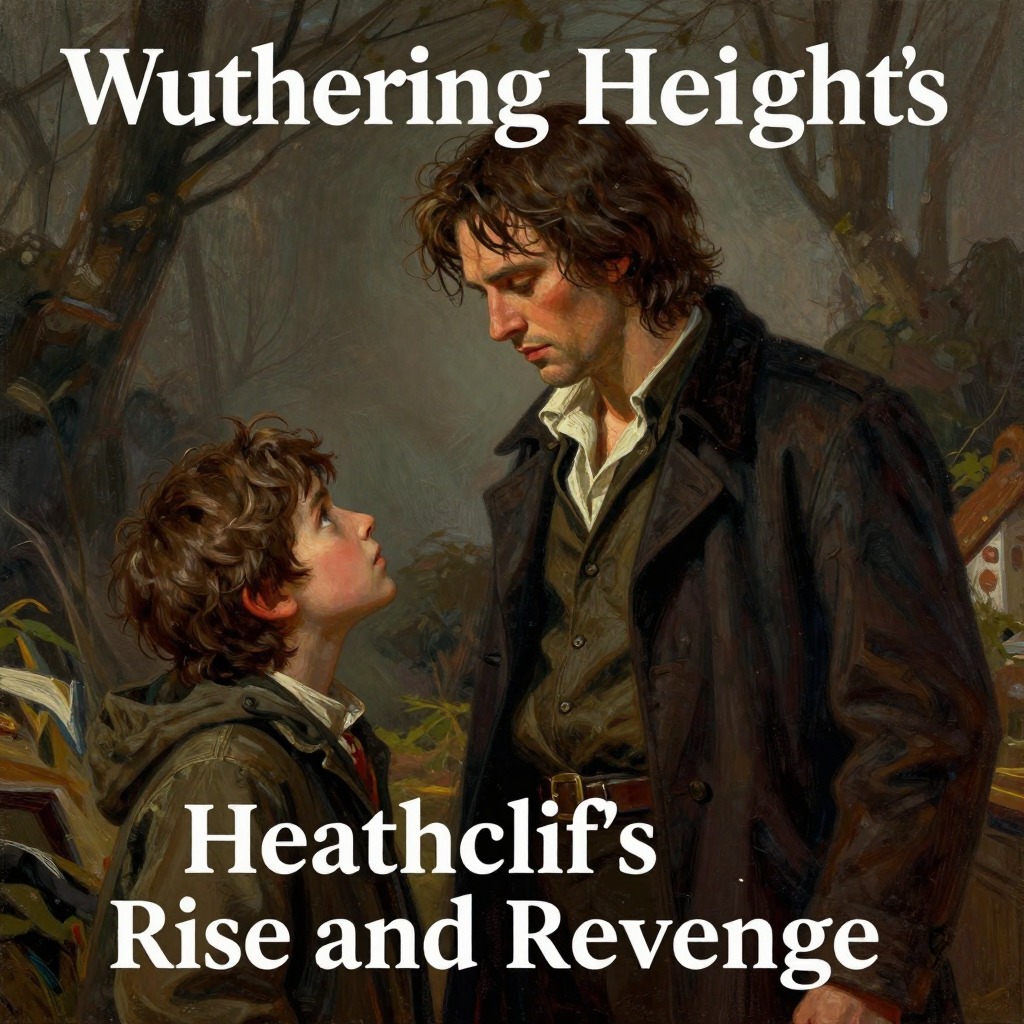
Heathcliff's origins are a mystery. Mr. Earnshaw found him "starving, and houseless, and as good as dumb, in the streets of Liverpool" and brought him home to Wuthering Heights. He was a "dirty, ragged, black-haired child" whose speech was unintelligible gibberish. The family christened him "Heathcliff," the name of a son who had died in childhood, and it served him ever after as both Christian and surname. From the beginning, he was marked as an outsider. Mr. Linton called him "that strange acquisition my late neighbour made, in his journey to Liverpool—a little Lascar, or an American or Spanish castaway," while Edgar Linton later dismissed him as "the gipsy—the ploughboy." Catherine Earnshaw herself, in a moment of brutal honesty, described him as "an unreclaimed creature, without refinement, without cultivation; an arid wilderness of furze and whinstone." This racial and social otherness, his "dark-skinned gipsy in aspect," sets him permanently apart from the gentility of Thrushcross Grange and fuels the class-based contempt that Hindley Earnshaw and the Lintons heap upon him.
Life and Plot Trajectory
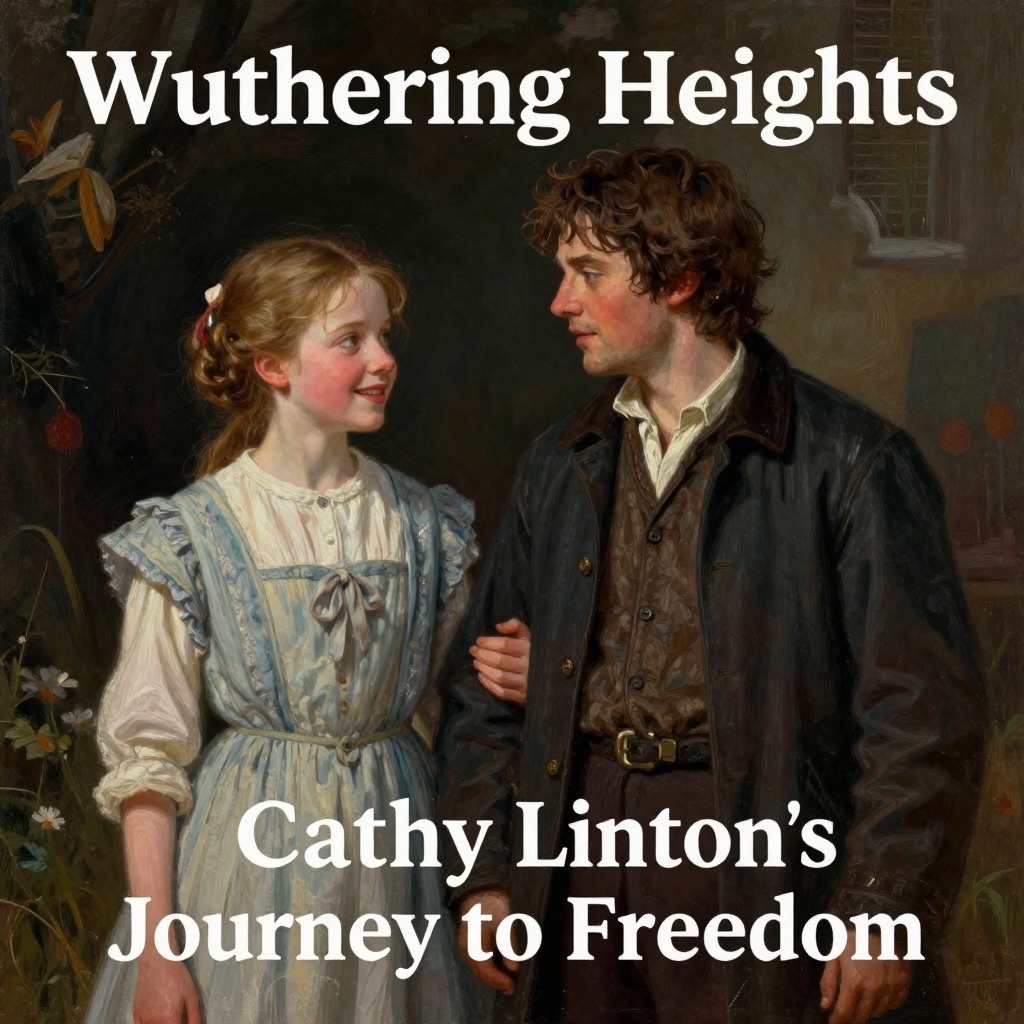
Heathcliff's life is a relentless arc from degradation to power. After Mr. Earnshaw's death, Hindley reduces him to a labourer, depriving him of education and companionship. The one bright point is his bond with Catherine Earnshaw, a soul-deep connection that he believes is absolute. When Catherine decides to marry Edgar Linton, declaring that "it would degrade me to marry Heathcliff now," he overhears only this damning sentence and flees Wuthering Heights. He disappears for three years, returning as a transformed man: "tall, athletic, well-formed," with a "half-civilised ferocity" lurking in his eyes, but now possessed of wealth and a dignified, though stern, manner. He re-enters the lives of the Earnshaws and Lintons not as a supplicant but as a predator. He marries Isabella Linton not out of love but as a tool for revenge, systematically acquiring the property of Wuthering Heights through Hindley's debts and gambling. He forces the marriage of his sickly son, Linton Heathcliff, to Catherine Linton (Cathy), thereby securing his legal claim to Thrushcross Grange. His trajectory is one of complete, methodical conquest, reducing his former oppressors and their heirs to dependency and misery.
Key Actions and Objectives
Heathcliff's primary objective is revenge, a goal he articulates with chilling clarity as a boy: "I'm trying to settle how I shall pay Hindley back. I don't care how long I wait, if I can only do it at last." This revenge is not merely personal but structural. He reduces Hareton Earnshaw, the rightful heir, to an illiterate, brutish servant in his own home, declaring, "Now, my bonny lad, you are mine! And we'll see if one tree won't grow as crooked as another, with the same wind to twist it!" He treats his own son, Linton, with contempt, calling him a "puling chicken" and a "whey-faced, whining wretch," using him only as a legal pawn. His cruelty is deliberate and sadistic. He tells Nelly Dean, "I have no pity! I have no pity! The more the worms writhe, the more I yearn to crush out their entrails!" He hangs Isabella's little dog, he strikes Cathy, and he orchestrates Edgar Linton's final misery by imprisoning Cathy and forcing her marriage. Yet, all of this is driven by the single, all-consuming loss of Catherine Earnshaw. His actions are a desperate, howling protest against a universe that has taken her from him.
Relationships and Conflict
Heathcliff's relationship with Catherine Earnshaw is the novel's emotional core. It is a bond he describes as ontological: "Whatever our souls are made of, his and mine are the same." Catherine herself declares, "I am Heathcliff! He's always, always in my mind: not as a pleasure, any more than I am always a pleasure to myself, but as my own being." This love is not gentle; it is a violent, mutual recognition that transcends social convention and even death. His relationship with Hindley is one of pure enmity, born from childhood persecution and culminating in Heathcliff's complete financial and social triumph. With Edgar Linton, he is locked in a rivalry for Catherine's soul, a conflict that Edgar cannot win because he cannot comprehend the depth of the bond he is fighting. His marriage to Isabella is a calculated act of cruelty, and his treatment of his son Linton is devoid of any paternal affection. The only relationship that shows a crack in his armor is his later, strange connection with Hareton, in whose face he sees Catherine's features more and more, a resemblance that ultimately disarms his will to destroy.
Change and Ending
In the final months of his life, Heathcliff undergoes a profound, internal change. The machinery of his revenge, once his sole purpose, becomes meaningless. He tells Nelly, "I get levers and mattocks to demolish the two houses... and when everything is ready and in my power, I find the will to lift a slate off either roof has vanished!" He loses the faculty of enjoying destruction. He becomes haunted not by guilt but by the overwhelming, constant presence of Catherine's memory. He sees her face in every cloud, every tree, and in the features of Hareton. He opens her coffin to be near her and bribes the sexton to remove the side of his own coffin so their dust may mingle. He starves himself, not as a suicide, but because his soul's bliss has killed his body's appetite. He dies in his oak-panelled bed, his face bearing a "frightful, life-like gaze of exultation." He is buried beside Catherine, and the local folk swear they see his ghost and hers walking the moors together.
Narrative Role and Evaluation
Heathcliff is the archetypal Byronic hero, a figure of immense passion, dark charisma, and transgressive power. He is the engine of the plot, the source of all conflict and tragedy. Yet, he is also a victim, a product of the class prejudice and emotional deprivation that shaped him. His story is one of a soul deformed by love and hatred, a man who achieves worldly triumph only to find it hollow. His final, strange peace suggests a transcendence of his own vengeful nature, a surrender to the love that has always been his only true reality. He is not a hero to be admired but a force to be reckoned with, a character whose intensity burns through the pages of the novel and leaves an indelible mark on the reader's imagination.